
Traveling from Kigali to gorilla trekking in Volcanoes National Park is one of the most…
Rwanda and Uganda Safari Itinerary with Lake Kivu
Volcanoes National Park – Rwanda’s Premier Gorilla Trekking Destination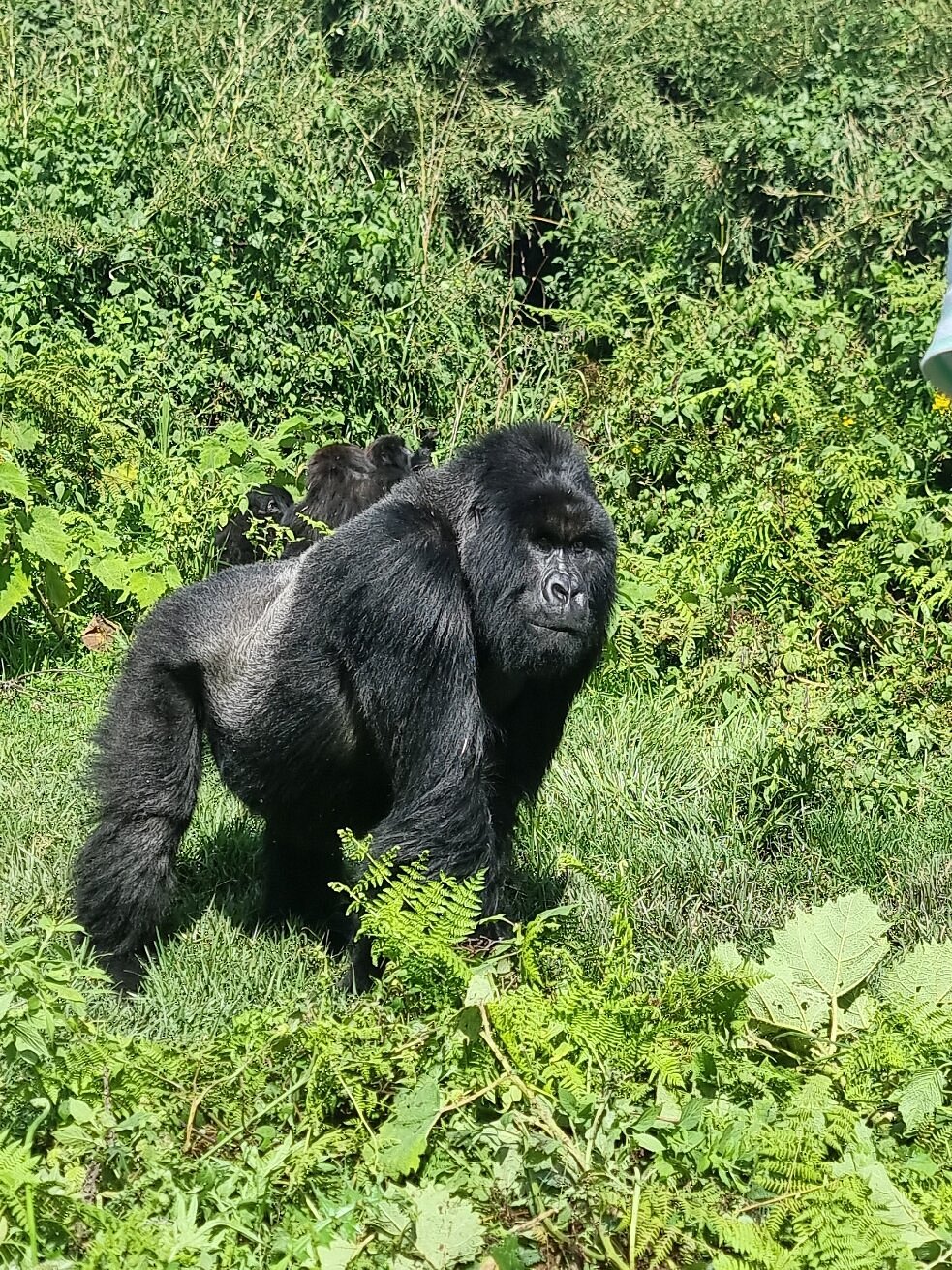
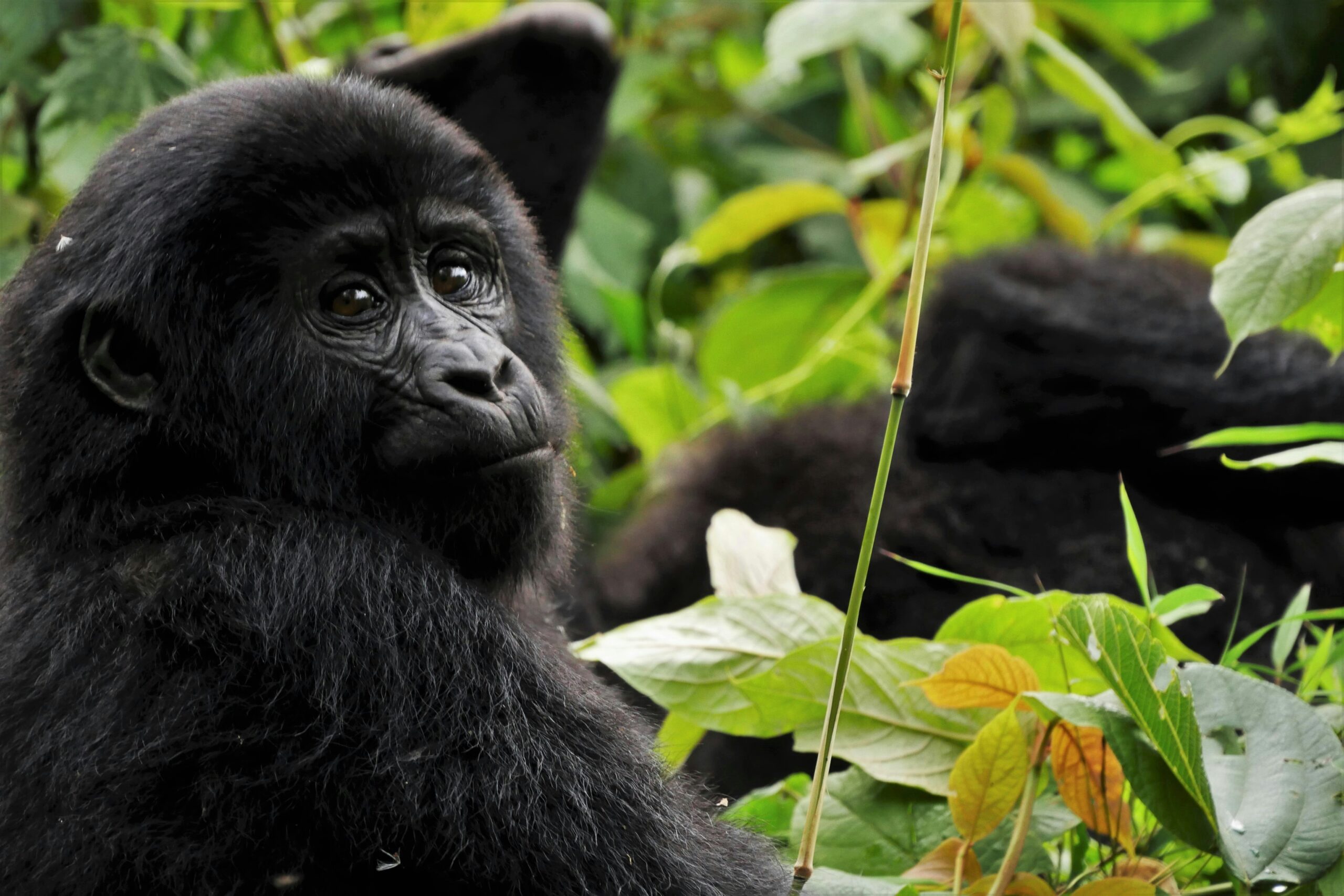
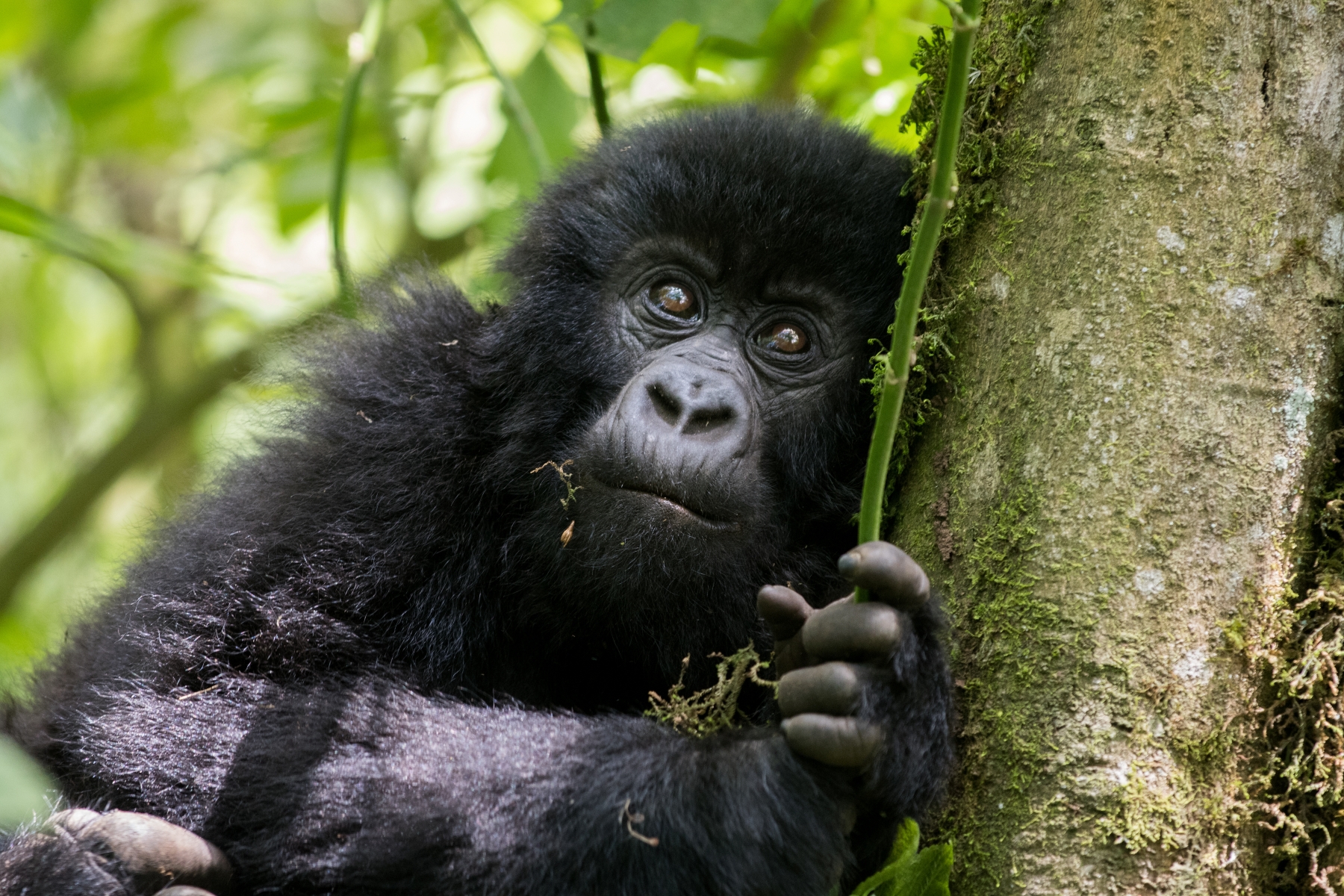
Volcanoes National Park is the highlight of every Rwanda and Uganda Safari Itinerary with Lake Kivu. Located in northwestern Rwanda, the park forms part of the Virunga Mountain range and protects one of the world’s last remaining populations of endangered mountain gorillas. Every year, thousands of travelers visit this remarkable destination to experience one of Africa’s greatest wildlife encounters.
The park covers approximately 160 square kilometers of bamboo forest, montane rainforest, and volcanic landscapes. Its cool climate and dramatic scenery create the perfect habitat for mountain gorillas, golden monkeys, and hundreds of bird species. Towering volcanoes rise above the forest, while mist drifts through the valleys, creating breathtaking views throughout the year.
Volcanoes National Park is also one of Africa’s leading conservation success stories. Strict visitor regulations, experienced park rangers, veterinary monitoring, and community involvement have helped increase the mountain gorilla population over recent decades. Today, the park represents a successful balance between conservation and sustainable tourism.
For many visitors, spending time in Volcanoes National Park becomes the most unforgettable part of their safari. The peaceful forests, fresh mountain air, and close encounters with gorillas create memories that last a lifetime.
Gorilla Trekking in Volcanoes National Park
Gorilla trekking begins early each morning at the Kinigi Park Headquarters. Visitors receive a briefing before being assigned to one of the habituated gorilla families. Small groups then travel with experienced rangers into the forest to begin the search.
The length of each trek varies depending on the gorillas’ location. Some families are reached within one hour, while others require a longer hike through bamboo forests and volcanic slopes. Throughout the journey, guides explain the surrounding ecosystem and share fascinating information about gorilla behavior.
Once the gorillas are located, visitors spend one unforgettable hour observing them in their natural habitat. Silverbacks quietly watch over their families, mothers care for their young, and playful juveniles entertain everyone with their energetic behavior. The experience is peaceful, emotional, and unlike any other wildlife encounter.
Other Activities in Volcanoes National Park
Although gorilla trekking is the main attraction, Volcanoes National Park offers many other activities that deserve attention.
Golden monkey trekking is one of the most popular alternatives. These colorful primates live in large groups and move quickly through the bamboo forest, creating excellent photography opportunities.
Visitors can also hike Mount Bisoke or Mount Karisimbi, explore the Musanze Caves, visit the Ellen DeGeneres Campus of the Dian Fossey Gorilla Fund, or enjoy cultural experiences in nearby communities.
Spending two or three nights in the region allows travelers to experience much more than gorilla trekking while enjoying Rwanda’s spectacular mountain scenery.
Bwindi Impenetrable National Park – Uganda’s Gorilla Kingdom
After visiting Volcanoes National Park, many travelers continue into Uganda through the Cyanika or Katuna border crossings. Just a short drive away lies Bwindi Impenetrable National Park, another UNESCO World Heritage Site famous for its mountain gorillas.
Bwindi protects one of Africa’s oldest rainforests and contains almost half of the world’s remaining mountain gorilla population. The forest is dense, mountainous, and incredibly rich in biodiversity. Besides gorillas, visitors may encounter forest elephants, duikers, monkeys, colorful birds, butterflies, and many unique plant species.
The park is divided into four main trekking sectors: Buhoma, Ruhija, Rushaga, and Nkuringo. Each sector offers different hiking experiences and beautiful forest landscapes.
Many travelers choose Bwindi because Uganda’s gorilla permits are generally more affordable than Rwanda’s. This allows visitors to combine the comfort of Kigali with gorilla trekking in Uganda, creating excellent value without sacrificing the quality of the experience.
Gorilla Trekking in Bwindi
Gorilla trekking in Bwindi follows a similar process to Rwanda but offers a different environment. The rainforest is thicker, the terrain is often steeper, and the hiking experience feels more adventurous.
Professional guides lead small groups through narrow forest trails while trackers search ahead for the assigned gorilla family. Every trek is unique because the gorillas move freely throughout the forest.
When visitors finally meet the gorillas, they spend one hour quietly observing their daily activities. Watching these gentle giants interact in such an ancient rainforest creates an unforgettable wildlife experience.
Many travelers who have visited both Rwanda and Uganda appreciate the different atmosphere each destination offers. Rwanda provides easier access and more open vegetation, while Bwindi offers a deeper rainforest adventure.
Choosing the Best Gorilla Trekking Sector
Each sector of Bwindi offers unique advantages.
Buhoma is the oldest and most accessible sector. It has comfortable lodges and relatively gentle hiking trails.
Rushaga has the largest number of habituated gorilla families. This increases permit availability and offers more trekking options.
Nkuringo is known for spectacular mountain views and luxury lodges. The hikes can be more challenging, but the scenery is exceptional.
Ruhija attracts birdwatchers because of its rich biodiversity and quieter forest environment.
The best sector depends on fitness level, accommodation preferences, and permit availability.
Golden Monkey Trekking – A Perfect Addition to Your Safari
Many travelers choose to include golden monkey trekking before crossing into Uganda. This activity offers a completely different wildlife experience from gorilla trekking.
Golden monkeys live in bamboo forests within Volcanoes National Park. Their bright golden-orange fur makes them easy to recognize, while their playful behavior keeps visitors entertained throughout the trek.
Unlike gorillas, golden monkeys remain highly active. They leap between bamboo stems, search for food, and interact constantly with other members of their troop. Their movement creates excellent opportunities for wildlife photography.
The trek itself is generally shorter and less demanding than gorilla trekking. This makes it suitable for visitors of different ages and fitness levels.
Because of its convenience and unique wildlife, golden monkey trekking fits perfectly into any Rwanda and Uganda Safari Itinerary with Lake Kivu.
Why Golden Monkey Trekking Is Worth Including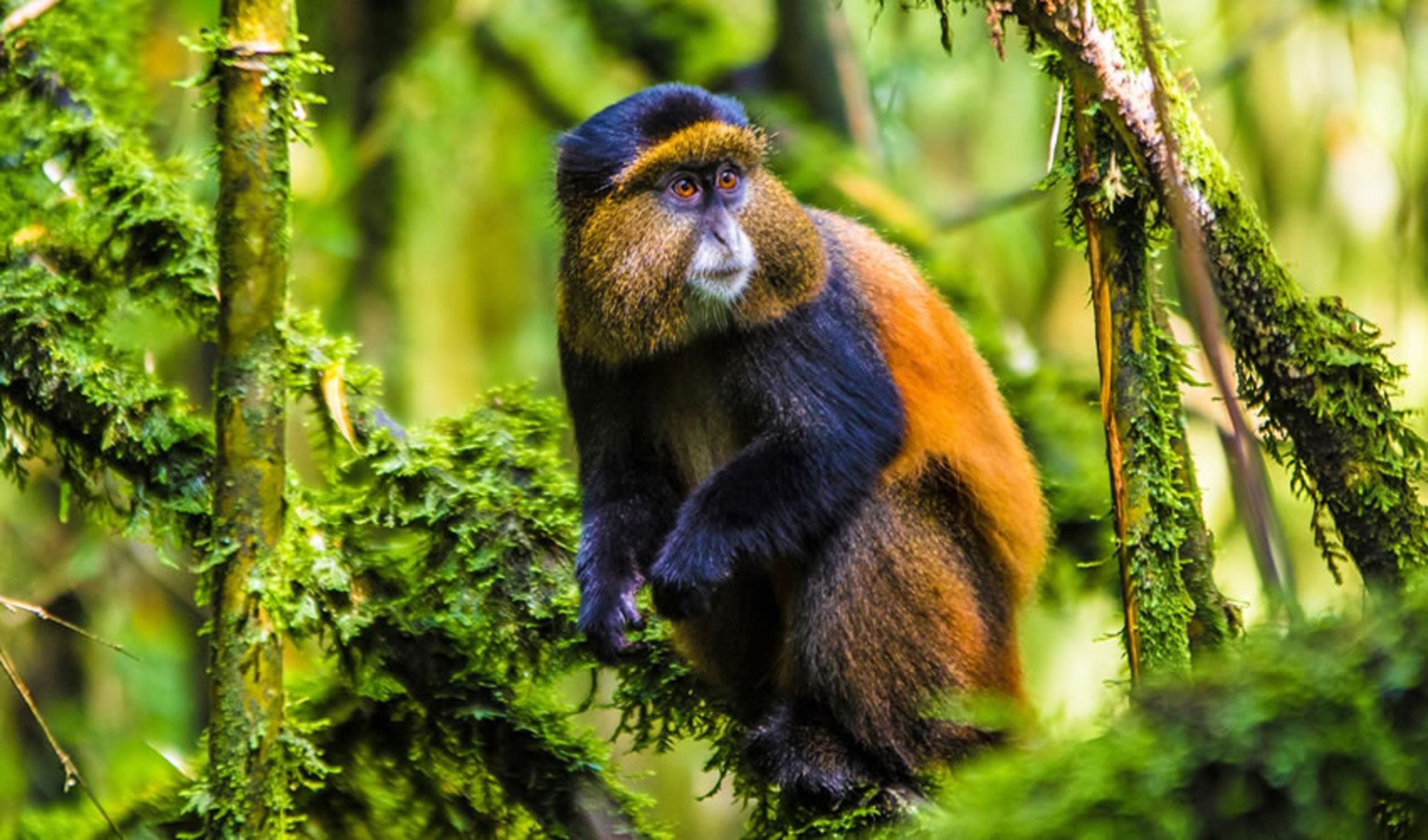
Golden monkey trekking offers several advantages for visitors spending multiple days in Volcanoes National Park.
The activity introduces travelers to another endangered primate while showcasing Rwanda’s beautiful bamboo forests. It also provides a more relaxed hiking experience that complements the physical effort of gorilla trekking.
Professional guides explain the monkeys’ behavior, feeding habits, and conservation status throughout the walk. Visitors leave with a greater understanding of Rwanda’s remarkable biodiversity.
Adding this activity creates a more complete safari while increasing opportunities for wildlife photography.
Batwa Cultural Experience – Discover Uganda’s Indigenous Heritage
No Rwanda and Uganda Safari Itinerary with Lake Kivu is complete without experiencing the rich cultural traditions of the Batwa people. Often called the “Keepers of the Forest,” the Batwa lived in Bwindi’s forests for generations before the area became a protected national park.
Today, guided cultural experiences allow visitors to learn about the Batwa’s traditional way of life. Local guides demonstrate ancient hunting techniques, fire-making methods, medicinal plants, music, dancing, storytelling, and traditional housing.
The experience provides valuable insight into how people once lived in harmony with the forest while depending entirely on natural resources.
Tourism also creates important income for Batwa communities, helping preserve their culture while supporting education and community development.
Authentic Cultural Encounters
The Batwa experience is much more than a cultural performance. Visitors have the opportunity to interact directly with community members and hear personal stories about their history and traditions.
Traditional songs, dances, and demonstrations highlight skills that have been passed from one generation to the next. Guests often participate in activities, creating enjoyable and meaningful cultural exchanges.
These experiences help visitors better understand the human side of conservation and the relationship between protected forests and local communities.
Crossing Between Rwanda and Uganda
Traveling between Rwanda and Uganda is simple and convenient. Most safari itineraries use either the Cyanika Border Post or the Katuna Border Post, depending on the chosen route.
The drive from Volcanoes National Park to Bwindi typically takes between three and five hours, depending on the selected trekking sector and border crossing.
Professional safari guides handle immigration procedures and assist travelers throughout the journey. Roads on both sides of the border continue to improve, making cross-border travel comfortable and efficient.
Visitors should carry valid passports, visas where required, and any necessary travel documents before arriving at the border.
East Africa Tourist Visa
Many international travelers benefit from the East Africa Tourist Visa, which allows entry into Rwanda, Uganda, and Kenya using one visa.
This visa simplifies travel while reducing paperwork and additional visa costs. It is especially useful for visitors combining Rwanda and Uganda during the same safari.
Before traveling, visitors should always check the latest immigration requirements, passport validity rules, and health regulations to ensure a smooth border crossing.
By combining Rwanda’s luxury wildlife experiences with Uganda’s diverse national parks and authentic cultural attractions, travelers enjoy one of East Africa’s most rewarding safari adventures. This combination explains why a Rwanda and Uganda Safari Itinerary with Lake Kivu continues to grow in popularity among wildlife enthusiasts from around the world.
Queen Elizabeth National Park – Uganda’s Classic Wildlife Safari
After exploring the mountain forests of Rwanda and Bwindi Impenetrable National Park, the journey continues to Queen Elizabeth National Park. This is Uganda’s most visited national park and one of East Africa’s finest wildlife destinations. Covering nearly 2,000 square kilometers, the park features open savannahs, crater lakes, wetlands, forests, and the famous Kazinga Channel. It is an essential stop on any Rwanda and Uganda Safari Itinerary with Lake Kivu because it offers the perfect contrast to gorilla trekking.
The park is home to more than 95 mammal species and over 600 bird species. Visitors can enjoy traditional game drives while searching for elephants, lions, buffaloes, leopards, Uganda kobs, waterbucks, warthogs, hyenas, and many other animals. Every safari introduces a different landscape, making each day exciting and rewarding.
Queen Elizabeth National Park also provides excellent accommodation. Luxury lodges, mid-range camps, and comfortable budget options are available throughout the park. Many properties overlook crater lakes, open plains, or the Kazinga Channel, giving visitors spectacular views throughout their stay.
The Famous Tree-Climbing Lions of Ishasha
One of the park’s biggest attractions is the Ishasha Sector. This southern region is internationally known for its rare tree-climbing lions.
Unlike most lions, the prides in Ishasha often rest high in large fig trees during the hottest part of the day. Scientists believe they climb to escape insects and enjoy cooler air above the ground.
Seeing these powerful cats resting in the branches creates an unforgettable wildlife experience. Wildlife photographers travel from around the world hoping to capture this unique behavior.
Although sightings cannot be guaranteed, experienced guides know the best areas to search. Their local knowledge greatly improves the chances of finding the lions during a game drive.
Wildlife Beyond the Lions
While the tree-climbing lions receive most of the attention, Queen Elizabeth National Park offers much more.
Large elephant herds move across the plains, buffaloes graze near wetlands, and antelope species are found throughout the park. Leopards occasionally appear during early morning or evening game drives, while spotted hyenas become active after sunset.
The park’s wetlands attract hippos, crocodiles, and hundreds of bird species. Every game drive provides excellent opportunities for wildlife photography and nature observation.
Kazinga Channel Boat Cruise
The Kazinga Channel is one of Uganda’s most famous safari attractions. This natural waterway connects Lake Edward and Lake George while supporting one of Africa’s highest concentrations of wildlife.
Boat cruises along the channel allow visitors to observe animals from a completely different perspective. The slow-moving boats pass close to hippos, crocodiles, elephants, buffaloes, and numerous bird species without disturbing their natural behavior.
The cruise usually lasts around two hours. During this time, experienced guides explain the local ecosystem while identifying wildlife along both shores.
Many visitors consider the Kazinga Channel one of the highlights of their safari because it combines beautiful scenery with exceptional wildlife viewing.
A Paradise for Birdwatchers
Bird enthusiasts will find the Kazinga Channel particularly rewarding.
More than 600 bird species have been recorded within Queen Elizabeth National Park. Common sightings include African fish eagles, saddle-billed storks, pied kingfishers, pelicans, cormorants, bee-eaters, herons, egrets, African jacanas, and many colorful weaver birds.
Even visitors with little interest in birdwatching quickly appreciate the incredible diversity found along the channel.
The peaceful boat cruise also creates excellent opportunities for landscape and wildlife photography.
Kibale Forest National Park – The Primate Capital of East Africa
No Rwanda and Uganda Safari Itinerary with Lake Kivu is complete without visiting Kibale Forest National Park. Often called the Primate Capital of East Africa, Kibale protects one of the continent’s richest rainforest ecosystems.
The park covers approximately 795 square kilometers and is home to 13 different primate species. These include chimpanzees, black-and-white colobus monkeys, red-tailed monkeys, blue monkeys, L’Hoest’s monkeys, olive baboons, and grey-cheeked mangabeys.
Dense tropical forests, scenic walking trails, and excellent conservation programs make Kibale one of Uganda’s most rewarding wildlife destinations.
Chimpanzee Trekking in Kibale Forest
Chimpanzee trekking is the park’s main attraction. Guided walks begin early in the morning when chimpanzees are most active.
Experienced trackers follow vocal calls and fresh signs before locating one of the habituated chimpanzee communities. Unlike gorillas, chimpanzees move quickly through the forest canopy, making every trek exciting and unpredictable.
Visitors spend one hour observing their natural behavior after locating the group. Chimpanzees communicate through loud calls, climb trees effortlessly, groom one another, and display remarkable intelligence throughout the encounter.
Many travelers consider chimpanzee trekking the perfect complement to gorilla trekking because the two experiences are completely different.
Bigodi Wetland Sanctuary
Just outside Kibale Forest lies the Bigodi Wetland Sanctuary.
This community-managed reserve is famous for its rich birdlife and primates. Guided walks introduce visitors to monkeys, colorful birds, butterflies, and unique wetland plants.
Bigodi also provides opportunities to meet local communities and learn about conservation initiatives that support sustainable tourism.
The sanctuary is an excellent afternoon activity after arriving in the Kibale region.
Relax at Lake Kivu Between Safari Adventures
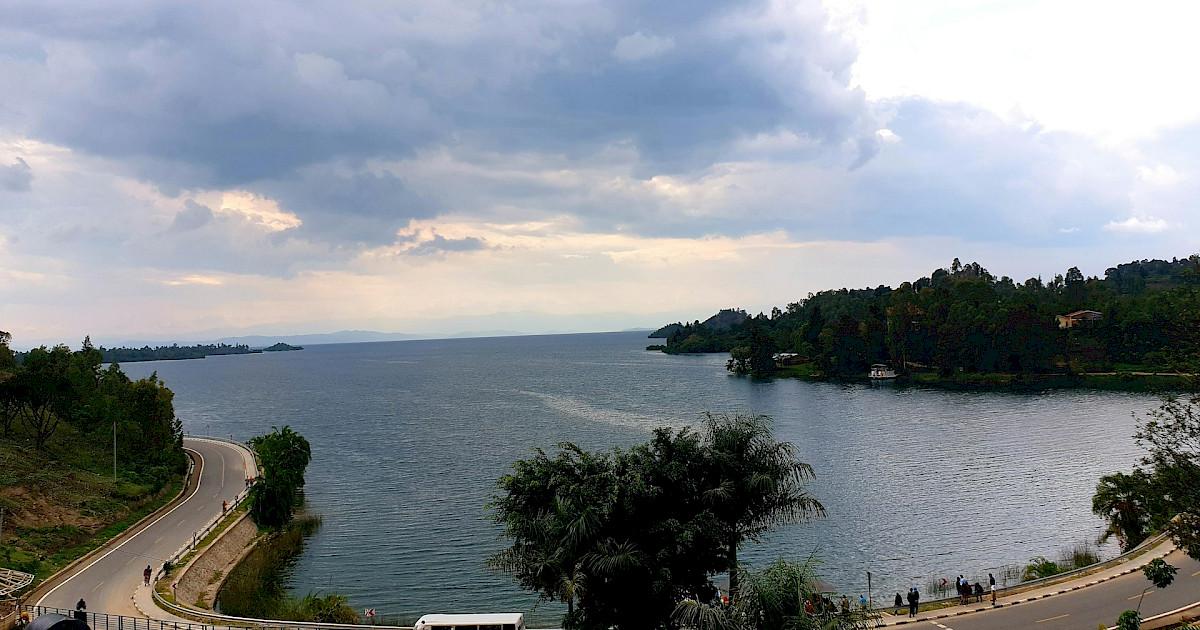
Lake Kivu provides the perfect opportunity to relax before or after visiting Uganda’s national parks. Many travelers spend two nights here to recover from gorilla trekking and long safari drives.
The peaceful environment offers a complete contrast to the excitement of wildlife viewing. Comfortable lakeside resorts provide swimming pools, private beaches, restaurants, and beautiful terraces overlooking the lake.
Fresh fish, locally grown coffee, and spectacular sunsets create memorable evenings after active safari days.
Boat Excursions on Lake Kivu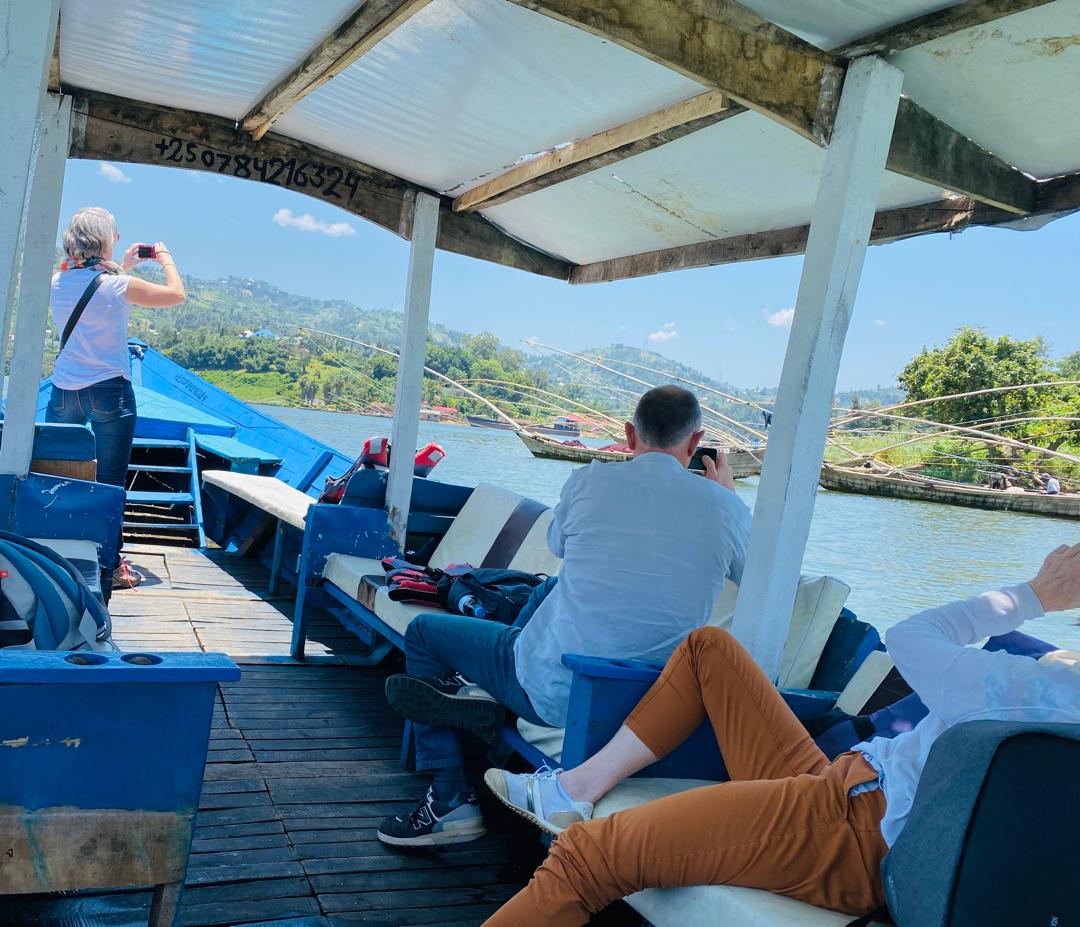
Boat cruises remain one of Lake Kivu’s most popular activities.
Visitors explore beautiful islands, traditional fishing villages, and hidden beaches while enjoying panoramic views of Rwanda’s rolling hills.
Napoleon Island is especially popular because of its fruit bat colony and scenic hiking trail.
Morning cruises provide calm conditions and excellent birdwatching, while sunset cruises create breathtaking photography opportunities.
Coffee Experiences Around Lake Kivu
Rwanda produces some of Africa’s finest specialty coffee, and Lake Kivu is one of the country’s leading coffee-growing regions.
Visitors can tour local coffee farms and learn about every stage of production. Guides explain planting, harvesting, washing, drying, roasting, and brewing techniques before inviting guests to taste freshly prepared coffee.
These experiences support local farmers while introducing visitors to one of Rwanda’s most important export industries.
Coffee tours also provide an enjoyable cultural activity between wildlife adventures.
Explore the Congo Nile Trail
Adventure travelers often include part of the famous Congo Nile Trail in their itinerary.
This scenic route follows the eastern shoreline of Lake Kivu through beautiful villages, forests, tea plantations, and coffee farms. It is suitable for hiking, cycling, or short guided walks depending on available time.
The trail offers spectacular viewpoints across the lake while providing opportunities to meet local communities and experience rural Rwanda.
Visitors frequently stop at viewpoints, markets, and lakeside cafés while enjoying one of East Africa’s most scenic landscapes.
Community Tourism Along the Trail
One of the greatest strengths of the Congo Nile Trail is its connection with local communities.
Visitors meet fishermen, farmers, artisans, and coffee producers while learning about traditional Rwandan life. Handmade crafts, cultural performances, and local cuisine create authentic experiences that cannot be found in larger cities.
Tourism along the trail also generates income for local families, helping preserve cultural traditions while supporting sustainable development.
Combining the Congo Nile Trail with Lake Kivu, gorilla trekking, Queen Elizabeth National Park, and Kibale Forest creates a balanced safari that includes wildlife, adventure, culture, and relaxation. This diversity is exactly what makes a Rwanda and Uganda Safari Itinerary with Lake Kivu one of the most complete travel experiences in East Africa.
Suggested Rwanda and Uganda Safari Itineraries
One of the biggest advantages of a Rwanda and Uganda Safari Itinerary with Lake Kivu is its flexibility. Whether you have one week or two weeks, you can combine the region’s best wildlife experiences with scenic landscapes and cultural attractions. Thanks to the short travel distances between Rwanda and Uganda, visitors can explore several national parks without spending too much time on the road.
The itineraries below are among the most popular options. They combine gorilla trekking, Big Five safaris, chimpanzee trekking, Lake Kivu, and cultural experiences into well-balanced adventures suitable for different travel styles and budgets.
7-Day Rwanda and Uganda Safari
A seven-day itinerary is ideal for travelers with limited time who still want to experience the highlights of both countries.
The journey usually begins in Kigali with a short city tour before continuing to Volcanoes National Park. Visitors enjoy gorilla trekking before crossing into Uganda to explore Bwindi Impenetrable National Park or Queen Elizabeth National Park. After exciting wildlife encounters, the safari continues to Lake Kivu for relaxation before returning to Kigali for departure.
This itinerary combines mountain gorillas, wildlife safaris, beautiful scenery, and peaceful lakeside experiences within one unforgettable week.
10-Day Rwanda and Uganda Safari
A ten-day itinerary offers a more relaxed pace while allowing visitors to experience additional attractions.
Along with gorilla trekking in Rwanda or Uganda, travelers can include golden monkey trekking, Queen Elizabeth National Park, the Kazinga Channel boat cruise, chimpanzee trekking in Kibale Forest, Bigodi Wetland Sanctuary, and several nights at Lake Kivu.
This itinerary provides more opportunities for photography, cultural visits, and relaxation while reducing long travel days.
14-Day Complete East African Adventure
A two-week itinerary is the perfect choice for travelers who want to explore both countries in depth.
In addition to Volcanoes National Park, Bwindi, Queen Elizabeth, Kibale Forest, and Lake Kivu, visitors may include Akagera National Park for Big Five game drives, Nyungwe Forest National Park for canopy walks and chimpanzee trekking, Kigali city tours, coffee experiences, and the Congo Nile Trail.
This itinerary delivers one of East Africa’s most complete wildlife holidays while balancing adventure with relaxation.
Best Time to Visit Rwanda and Uganda
Both Rwanda and Uganda are excellent safari destinations throughout the year. Their tropical climate allows wildlife viewing in every season, although weather conditions influence trekking, photography, and road travel.
The dry seasons from June to September and December to February are generally considered the best times for gorilla trekking and wildlife safaris. Forest trails are easier to walk, while animals gather around rivers and water sources, making them easier to spot.
During the rainy seasons, forests become greener and waterfalls more impressive. Birdwatching also improves because many migratory species arrive during these months. Although some trails become muddy, experienced guides continue operating safely throughout the year.
Travelers planning a Rwanda and Uganda Safari Itinerary with Lake Kivu should choose their travel dates based on preferred activities rather than weather alone.
Best Season for Gorilla Trekking
Mountain gorilla trekking is available every day of the year.
However, many visitors prefer the dry months because hiking conditions are generally easier. Trails are less slippery, and photography becomes more comfortable with clearer skies.
The rainy seasons also have advantages. The forests appear greener, visitor numbers are lower, and permits are often easier to secure. Regardless of the season, gorilla encounters remain equally rewarding.
Best Time for Wildlife Safaris
Game drives in Queen Elizabeth National Park and Akagera National Park are productive throughout the year.
Dry months improve visibility because shorter vegetation makes wildlife easier to locate. Animals also spend more time around permanent water sources.
Rainy months produce lush landscapes and dramatic scenery, creating excellent conditions for photography while supporting abundant birdlife.
Safari Costs and Budget Planning
The cost of a Rwanda and Uganda Safari Itinerary with Lake Kivu depends on travel style, accommodation, group size, and selected activities.
Budget travelers can choose comfortable lodges and shared transport while still enjoying excellent wildlife experiences. Mid-range safaris offer upgraded accommodation, private vehicles, and personalized services. Luxury travelers enjoy exclusive lodges, premium dining, private guides, and exceptional comfort throughout the journey.
Major safari costs usually include gorilla permits, accommodation, transportation, park entrance fees, guide services, boat cruises, and optional cultural activities.
Planning your safari with an experienced local operator helps maximize value while ensuring every detail is professionally organized.
Main Safari Expenses
The largest safari expense is usually the gorilla permit. Accommodation also represents a significant portion of the budget, followed by transportation and park activities.
Additional expenses may include chimpanzee permits, golden monkey trekking, boat cruises, cultural visits, meals, drinks, tips, and travel insurance.
Booking well in advance often provides better accommodation choices and improves gorilla permit availability, especially during peak travel seasons.
Visa Requirements and Border Crossings
Traveling between Rwanda and Uganda is simple for most international visitors.
Many travelers choose the East Africa Tourist Visa, which allows entry into Rwanda, Uganda, and Kenya using a single visa. This option simplifies travel while reducing administrative procedures.
The most commonly used border crossings are Cyanika and Katuna. Both provide straightforward immigration procedures for tourists traveling with experienced safari guides.
Before departure, travelers should verify passport validity, visa requirements, vaccination recommendations, and any updated travel regulations.
Travel Documents
Visitors should carry a passport valid for at least six months beyond their travel dates.
Travel insurance is highly recommended for all safari activities. Copies of important travel documents should also be stored electronically for additional security.
Professional safari companies assist clients with travel advice before arrival, ensuring smooth border crossings throughout the journey.
Packing Tips for Your Safari
Packing correctly helps visitors enjoy every part of their safari comfortably.
Lightweight clothing in neutral colors is ideal for game drives. Long-sleeved shirts and waterproof jackets provide protection during forest trekking, while strong hiking boots offer good support on uneven trails.
Other useful items include gardening gloves for gorilla trekking, sunscreen, sunglasses, insect repellent, reusable water bottles, binoculars, cameras, memory cards, portable chargers, and personal medications.
A small backpack is useful for carrying water, snacks, cameras, and rain gear during daily activities.
Photography Equipment
Wildlife photography is one of the highlights of this safari.
A camera with a zoom lens allows visitors to capture distant animals during game drives. Wide-angle lenses work well for landscapes around Lake Kivu, Volcanoes National Park, and Queen Elizabeth National Park.
Extra batteries and memory cards are recommended because charging opportunities may be limited during long safari days.
Why Choose Universal Ventures Rwanda
Universal Ventures Rwanda specializes in unforgettable wildlife safaris across Rwanda and Uganda. With years of experience organizing tailor-made holidays, we create personalized itineraries that match every travel style, budget, and interest.
Whether you dream of gorilla trekking, chimpanzee tracking, Big Five game drives, Lake Kivu relaxation, cultural experiences, birdwatching, or luxury safaris, our experienced team handles every detail professionally.
Our services include gorilla permit reservations, hotel bookings, airport transfers, private 4×4 safari vehicles, professional English-speaking guides, cross-border logistics, luxury and budget accommodation, and customized safari planning.
Every itinerary is carefully designed to provide comfort, safety, flexibility, and unforgettable memories.
Contact Universal Ventures Rwanda
Start planning your dream Rwanda and Uganda Safari Itinerary with Lake Kivu with our expert safari consultants.
Universal Ventures Rwanda
Website: https://universalventuresrwanda.com
Email: info@universalventuresrwanda.com
WhatsApp: +250 781441853
Office: KK 15 Road, Opposite IPRC Main Entrance, Kigali, Rwanda
Our team is ready to help you create a personalized safari that combines the very best of Rwanda and Uganda.

Related Posts

Comments (0)